
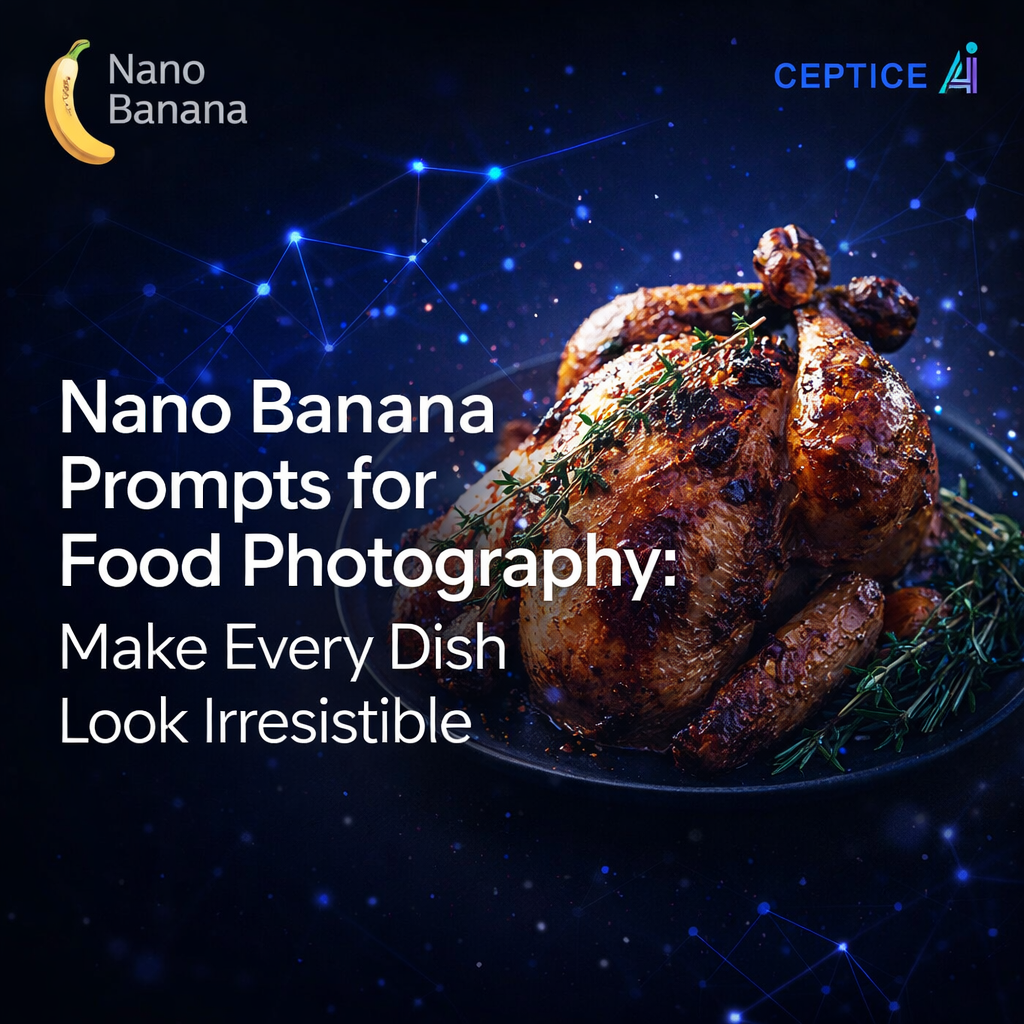
Food photography is the most commercially dense photography genre on earth — every restaurant, cookbook, food brand, and recipe blog lives or dies by the quality of its food images. When you’re generating food photography with Nano Banana Prompts, the standards are brutally high. The viewer’s eyes are connected directly to their appetite, and the brain registers “delicious” or “unappetizing” in milliseconds. A poorly engineered food photography prompt produces food that looks cold, plastic, or vaguely threatening. A precision-engineered Nano Banana Prompt produces images that make people reach for their phone to make a reservation.
What Is Food Photography?
Food photography is the art of making edible subjects look as delicious, fresh, and appealing as possible through technical and compositional craft. It’s divided into several distinct sub-styles: editorial food photography (magazine-driven, artistic, often abstract), restaurant and menu photography (product-focused, clean, appetizing), lifestyle food photography (food in context — hands, kitchens, gatherings), cookbook photography (clean, instructional, beautifully lit), and social media food photography (vibrant, dramatic, highly stylized). Each sub-style requires a completely different Nano Banana Prompt structure and aesthetic philosophy.
The Full Nano Banana Prompt
A professional food photography image captured on a Canon EOS R5, 100mm L macro f/2.8 lens, aperture f/4.0, ISO 200, shutter speed 1/125s, tripod mounted. Subject: A perfectly plated fine dining entrée — pan-seared duck breast, medium-rare, skin side up, sliced into five elegant pieces revealing the pink interior. Accompanied by a smear of blackberry gastrique, three roasted baby turnips, micro herbs scattered deliberately, a quenelle of truffle-scented potato purée, and a pool of red wine jus. Plate: Matte black ceramic, round, large format — negative space used deliberately. Setting: Dark, moody restaurant setting. Polished dark walnut table surface, slight reflection of the plate visible. Crushed linen napkin in deep charcoal visible in the soft background. Lighting: Single large softbox positioned at 45 degrees from the upper left, acting as a window-light analog. A second smaller reflector providing minimal fill from the right, preserving shadow depth. Backlight from a separate source creating rim light on the jus pool and gastrique smear — making the sauces glow from within. Composition: Three-quarter top-down angle (approximately 45 degrees from horizontal), plate centered, slight negative space to the upper right. The sliced duck creating visual movement from lower left to upper right. Mood: Luxurious, Michelin-star fine dining, quiet sophistication. Color grading: Deep dark tones with dramatic contrast — rich mahogany from the duck skin, deep crimson gastrique, brilliant green micro herbs as color accent. No heavy filter. Realism level: 8K ultra-realistic, fine dining editorial photography quality, individual herb details visible, sauce texture and sheen photorealistic.Prompt Breakdown
Camera & Lens
The Canon 100mm L macro is the single most used lens in professional food photography — its focal length creates a natural, flattering perspective on food subjects without the distortion of wide-angle lenses. The macro capability allows tack-sharp rendering of surface textures, sauces, and fine details at very close distances. f/4.0 gives enough depth of field to keep the full plate in focus while slightly softening the background props and table surface.
Aperture, ISO & Shutter Speed
f/4.0 is the food photography sweet spot — sharp enough for full plate clarity, soft enough to separate the food from the background. ISO 200 keeps maximum color accuracy and shadow detail, critical for the nuanced sauce tones and micro herb colors. The shutter speed is irrelevant to the final look (studio still life), but specifying 1/125s signals controlled, non-rushed studio conditions.
Lighting
The three-light system described — key softbox at 45 degrees, minimal fill reflector, and backlight for sauce glow — is the professional food photography standard. The backlight “sauce glow” is the single most effective technique in fine dining food photography: liquid elements (sauces, jus, glazes) appear luminous and three-dimensional when backlit. Without this instruction, sauces look flat and opaque. This is the detail that separates editorial food photography from menu photography.
Composition
The 45-degree angle (three-quarter overhead) is the dominant food photography angle for fine dining — it shows the full plate while revealing the height and three-dimensional quality of plating elements. Straight overhead works for flat dishes, eye-level for burgers and stacked foods, 45 degrees for plated fine dining. Always specify the exact angle.
5 Prompt Variations
Variation 1: Rustic Breakfast Flatlay
Lifestyle food photography, Sony A7R V, 35mm f/2.8, ISO 400, 1/200s, handheld. Subject: A beautifully chaotic breakfast flatlay — sourdough toast with avocado, a soft-poached egg perfectly broken to release the yolk, scattered cherry tomatoes, fresh herbs, flaky sea salt. Alongside: A ceramic mug of black coffee, a small glass pitcher of orange juice catching the light. Setting: Overhead (90 degrees), worn reclaimed wood table surface. Lighting: Natural window light from the left, soft overcast day, diffused and shadowless, clean and fresh. Props: Crumpled linen napkin, vintage fork, a few scattered coffee beans. Color grading: Warm natural tones — golden yolk, green avocado, white ceramic, pale wood. Mood: Sunday morning, leisurely, abundantly simple. Realism level: 4K ultra-realistic, lifestyle food magazine quality.Variation 2: Dark Moody Chocolate Cake
Editorial food photography, Canon EOS R6 Mark II, 85mm f/1.8, ISO 400, 1/160s. Subject: A dramatic three-layer dark chocolate cake, one slice cut and slightly pulled forward to reveal the interior layers. Deep chocolate ganache dripping down the sides. Fresh raspberries and edible gold leaf on top. Setting: Dark marble surface, near-black background. Lighting: Single hard light from upper left creating deep dramatic shadows, rim light on the ganache drips creating specular highlights — making chocolate appear molten and rich. Composition: Slight 30-degree overhead angle, cake right of center, cut slice creating visual entry point. Color grading: Near-monochromatic dark chocolate tones broken by vivid raspberry red and gold. Mood: Decadent, dramatic, indulgent luxury. Realism level: 8K ultra-realistic, ganache drip texture photorealistic.Variation 3: Ramen Close-Up Steam Shot
Restaurant food photography, Nikon Z7 II, 100mm f/2.8 macro, ISO 800, 1/250s. Subject: A tonkotsu ramen bowl in extreme close-up — rich creamy pork broth with a visible fat sheen on the surface. Perfectly cooked noodles, two halves of a marinated soft-boiled egg (golden jammy yolk visible), chashu pork belly slices, nori, bamboo shoots, spring onion. Real steam rising from the bowl surface — caught with a backlight source. Setting: Dark Japanese restaurant counter, minimal. Lighting: Dramatic side light from the left at eye level, backlight source creating visible steam, rim light on the bowl lip. Composition: Eye-level angle, steam rising into frame, bowl filling 80% of frame, background out of focus dark restaurant. Color grading: Warm amber broth tones, golden egg yolk, dark and moody overall. Mood: Authentic, deeply satisfying, cinematic Japanese street food. Realism level: 8K ultra-realistic, individual steam wisps visible.Variation 4: Artisan Coffee Overhead
Cafe lifestyle food photography, Sony A7C II, 50mm f/2.0, ISO 200, 1/160s. Subject: A perfect flat white in a handmade ceramic cup — intricate latte art forming a rosette pattern on the surface. Accompanied by a small shortbread cookie on the saucer. Setting: Top-down overhead shot on a textured linen tablecloth in warm cream, morning light. A second cup of black Americano slightly out of focus in the upper background. Lighting: Natural window light directly overhead, soft diffused morning light, casting minimal shadows. Composition: Cup centered, saucer visible, second cup as supporting element in background, slight negative space. Color grading: Warm neutral cream and caramel tones, soft whites, earthy ceramic colors. Mood: Slow morning, artisan craft, café culture. Realism level: 4K ultra-realistic, latte art rosette detail crisp.Variation 5: Summer Fruit Salad Light & Fresh
Editorial food photography, Canon EOS R5, 85mm f/2.0, ISO 100, 1/250s. Subject: A vibrant summer fruit salad in a large wide white ceramic bowl — sliced strawberries, watermelon cubes, blueberries, mango pieces, mint leaves, edible flowers, a drizzle of honey creating a glistening thread. Setting: White marble surface, soft white background, minimal props — only a linen napkin and a small bottle of honey. Lighting: Large overhead diffused natural light (north-facing window equivalent), shadowless and clean, preserving vivid fruit colors. Composition: Three-quarter overhead angle, bowl centered, honey drizzle in progress — the thread of honey caught mid-pour. Color grading: Vivid, saturated fruit colors against clean white — pure visual appetite trigger. Mood: Healthy, joyful, summer abundance. Realism level: 8K ultra-realistic, individual honey droplets visible.Pro Tips for Food Photography Prompts
- Describe the hero ingredient’s internal state: “Medium-rare duck breast with pink interior,” “jammy golden-yolked soft-boiled egg,” “perfectly caramelized crust on the crème brûlée” — interior and texture states dramatically improve output accuracy.
- Specify the sauce behavior: Sauces are the most technically demanding element in food photography. “Gastrique smear,” “ganache drip with specular highlight,” “jus pool with backlit glow” — be extremely specific about sauce placement and light interaction.
- Name the camera angle precisely: Overhead (90°) for flatlays, eye-level for drinks and stacked foods, 45° for plated fine dining, 30° for most bowls and rustic presentations. Each angle tells a completely different food story.
- Include steam and condensation: “Visible steam rising from the broth,” “condensation beads on the cold glass” — thermal indicators make food photography feel alive and immediate rather than static and staged.
- Specify plate or vessel choice: The vessel is as much a design element as the food. “Matte black ceramic,” “handmade Japanese pottery,” “clean white porcelain,” “rustic cast iron skillet” — each vessel signals an entire culinary philosophy.
Common Mistakes to Avoid
- Over-perfect plating: Food that looks too geometrically perfect reads as plastic or artificial. Include deliberate “natural imperfections” — a slight smear on the plate rim, a herb that’s not perfectly placed, sauce with natural variation in density.
- Ignoring background depth: A sharply focused background competes with the food. Specify “soft bokeh background” or “out-of-focus environmental props” to ensure the food remains the visual priority.
- Generic “delicious food” prompts: This produces the most generic AI food outputs imaginable. Name every component, describe every texture, specify every color. The more ingredient-specific your Nano Banana Prompt, the more appetizing the output.
- Flat, uninspired lighting: Even natural light food photography requires a defined light direction. Specify “window light from the left,” “overhead diffused light,” or “backlit with rim light on liquid elements” — never leave lighting undefined.
FAQ
What camera angle works best for most food photography Nano Banana Prompts?
For fine dining plated dishes: 45 degrees. For bowls (ramen, salads, soups): 30-45 degrees. For flatlays and overhead styled shots: 90 degrees straight down. For sandwiches, burgers, and stacked foods: eye-level. For cocktails and tall drinks: eye-level with slight upward angle. Matching the angle to the food type is the single most important compositional decision in food photography prompts.
How do I make AI-generated food look genuinely appetizing rather than artificial?
Four elements consistently separate appetizing from artificial: specify visible steam or condensation (thermal life), describe natural plating imperfections (organic reality), include sauce or liquid with backlight glow (luminosity), and specify individual ingredient textures in detail (sensory specificity). The brain reads “delicious” through texture and thermal cues more than color alone.
Can Nano Banana Prompts generate accurate food textures like crispy skin, flaky pastry, or creamy sauces?
Yes, with explicit texture vocabulary. “Crispy, rendered duck skin with visible fat bubbles,” “shatteringly thin caramelized sugar crust on crème brûlée,” “silky emulsified butter sauce with a slight sheen” — culinary texture vocabulary produces dramatically more accurate surface rendering than generic descriptors like “cooked” or “delicious.”
Conclusion
Food photography prompts are an act of culinary seduction. Every ingredient, every texture, every sauce behavior, every lighting decision serves a single goal: making the viewer want to eat what they’re seeing. With Nano Banana Prompts, describe food the way a chef talks about it — with ingredient precision, technique specificity, and sensory language. Stop generating “food” and start generating appetite.
