Influencer marketing on Instagram has long been hampered by attribution gaps and leaky conversion funnels. When an influencer tells their audience to 'check the link in bio' or swipe up on Stories, tracking individual sales is notoriously imprecise. By integrating comment-to-DM automation into Instagram Collab posts and sponsored Reels, brands can turn passive influencer views into trackable 1-on-1 conversations, capturing verified customer leads directly into the brand's sales pipeline.
1. How Instagram Collab Posts Work with the Messenger API
Instagram's Co-Author (Collab) feature allows a single Reel or post to appear simultaneously on both the influencer's profile and the brand's profile. However, under Meta Graph API architecture, webhook events are delivered to the primary media owner—the account that originally created and published the draft. To automate comment replies, the brand must either be the primary creator or the influencer must authorize the brand's automation software.
2. Co-Branded Influencer Link Cards
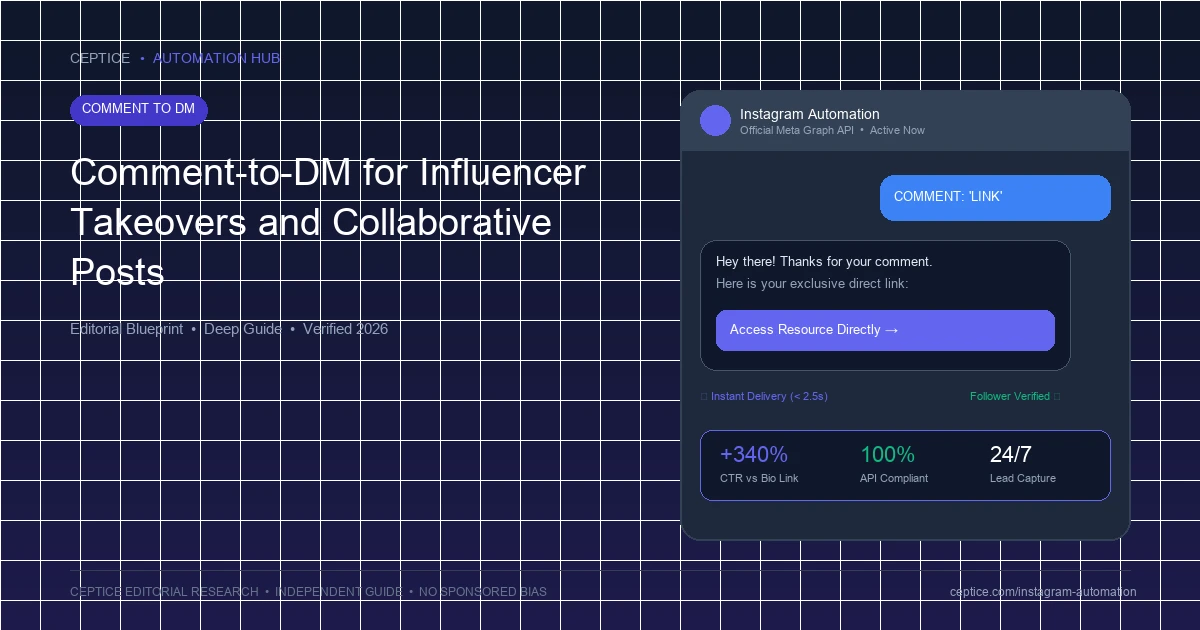
When an influencer's follower comments the campaign keyword, deliver a co-branded DM card: 'Hey [Name]! Thanks for supporting @influencer's post. Here is your exclusive VIP 20% discount code for our new collection:'. Featuring the influencer's name and photo inside the DM maintains conversational trust and lifts click rates.
Influencer Collab Automation Workflow
- 1. Creative Briefing: Influencer instructed to film Reel concluding with CTA: 'Comment SARAH to get my VIP link'.
- 2. Co-Author Publishing: Post published as Collab post with brand as invited co-author and primary media owner.
- 3. Co-Branded Delivery: Automation delivers co-branded DM card with Sarah's custom discount permalink in 3 seconds.
- 4. Payout Attribution: Shopify webhook records conversion; affiliate commission attributed automatically.
3. Granular Influencer Attribution & Commission Tracking
Assign unique trigger keywords to each collaborating creator (e.g. SARAH20, ALEXVIP). Embed creator-specific UTM parameters and dynamic Shopify affiliate coupon codes into the automated link buttons. This provides definitive, fraud-free attribution showing exactly which creators generated paying customers.
| Campaign Strategy | Attribution Accuracy | Average Click-Through | Lead Capture Capability |
|---|
| Influencer Bio Link | Low (Relies on cookies & manual codes) | 1.5% - 3.2% | Zero lead capture (Traffic lost on bounce) |
| Story Swipe-Up Link | Medium (24-hour expiration window) | 4% - 8% | Zero lead capture |
| Automated Comment Collab | 100% Accurate (Tracked via unique keyword) | 35% - 50% | High (Captures verified email in DM) |
Influencer Campaign Compliance Rules
FTC and Meta disclosure standards.
- Ensure the post caption features compliant sponsorship disclosures (e.g. #ad, #sponsored, or Paid Partnership label).
- Disclose any affiliate commission arrangements within the automated direct message card.
- Respect the 24-hour messaging window for post-interaction promotional follow-ups.
- Verify influencer account permissions prior to media launch.
To manage multi-influencer campaigns with automated comment attribution and co-branded direct messages, the AP3K platform provides specialized agency and creator collaboration tools.
Frequently Asked Questions
What happens if the influencer is the primary author and doesn't use automation?
If the influencer is the primary author, the brand's automation tool cannot receive comment webhooks directly. The brand must either be invited as the initial publishing author or invite the influencer to connect their account to the shared campaign workspace.
Can we capture emails for both the brand and the influencer?
Yes. With appropriate consent disclaimers, the automated DM can sync captured emails to both the brand's CRM (e.g. Klaviyo) and the creator's email newsletter platform (e.g. Beehiiv).
Configure an automated human handoff trigger: if a comment contains support-related words (e.g. 'shipping', 'returns', 'defective'), route the conversation to the brand's live customer support inbox.



 Comment to DM

 Arabic